.png)


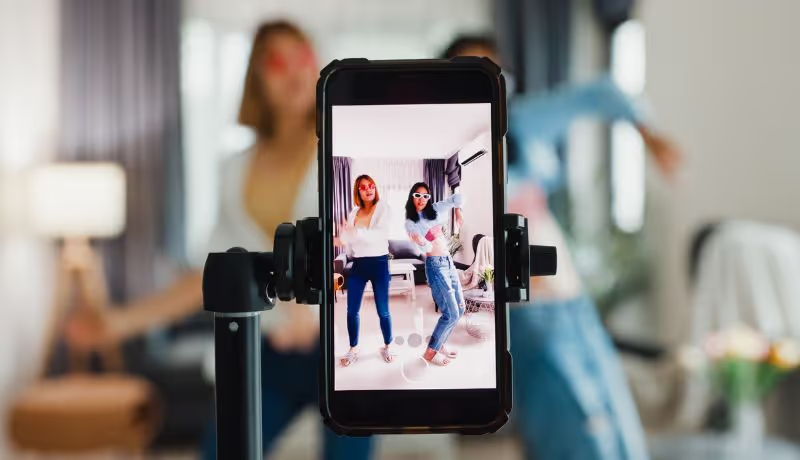
Most agencies treat TikTok slang like a vocabulary test. They study the latest glossaries for terms like "rizz," "delulu," or "main character energy" and try to sprinkle them into client captions to stay relevant.
This is a dangerous strategy. For an agency managing 50 or more accounts, a slang dictionary is a dead end.
It tells you what a word means, but it doesn't tell you if that word belongs in the mouth of a local law firm, a SaaS provider, or a medical clinic.
When you treat slang as a dictionary problem instead of a workflow problem, your error rate spikes.
In 2026, the cost of "cringe" content is more than just a few unfollows: it is a 30% drop in client satisfaction and a direct threat to your agency’s retainers.
To scale, you don't need a better dictionary. You need a Brand-Safety Net.
🎬 DOWNLOAD: The TikTok Slang Brand-Safety Checklist
Stop the "cringe" before it hits the feed. Don't let a misunderstood trend tank a client retainer. Get the 4-step vetting framework to ensure every slang term fits your client’s specific brand voice and legal guardrails.
Why Static Glossaries Fail Growing Agencies
The problem with a standard "TikTok Slang Guide" is that it is platform-centric, not brand-centric.
If your team is manually "stalking" trends and guessing which terms fit which clients, you are experiencing massive fulfillment toil.
This manual vetting process creates a bottleneck that causes you to miss the narrow 48-hour window when a trend is actually peaking.
Even worse, without a software-enforced safety net, it is only a matter of time before a risky trend meant for a streetwear client accidentally bleeds into the queue of a risk-averse B2B account.
However, if you do need a quick glossary to get started with, here's a list to help along.
Phase 1: The Brand Brain (Workspace Profiles)
The first layer of your safety net is the Workspace Profile.
Instead of re-evaluating slang for every post, you "hard-code" the brand’s DNA into their specific workspace. By defining the brand voice, target personas, and specific "Negative Constraints," you create an automated filter.
If a client profile is set to "Authoritative and Formal," your AI content assistant won't even suggest Gen-Alpha slang. By siloed branding at the workspace level, you ensure that every draft is 90% post-ready and safe from the beginning.
Phase 2: The Approval Safety Net (White-Label Portals)
The second layer is the client buy-in. Using trending slang is a calculated risk, and that risk should never be taken by a junior SMM in isolation.
A high-growth agency uses a white label social media management platform to route risky content through an explicit approval gate. When a trend is on the edge of a brand’s comfort zone, you send a social media approval link to the client.
This serves two purposes:
- Liability Protection: The client has the final sign-off on the tone.
- Strategic Authority: It shows the client you are monitoring trends and proactively managing their brand reputation, rather than just "guessing."
Phase 3: Fulfillment Velocity
Trends peak and die in days. If your approval process takes a week, you've already lost the ROI.
By using social media marketing automation, you can move from "Discovery" to "Published" in minutes. While the trend is still rising, you use CaptionAI to generate the on-brand script and ImageAI to create the high-fidelity visual. Because the safety net is built into the workflow, you can hit "Send for Approval" immediately.
Conclusion: Strategy Over Toil
TikTok slang isn't a joke: it’s a high-velocity language that requires a professional vetting infrastructure. Agencies that win in 2026 are those that replace manual glossaries with repeatable, software-enforced brand safety nets.
Ready to de-risk your TikTok strategy?
Stop the cringe. Scale the strategy.



Want 10 free social posts for your client or brand?
CloudStudio helps automate your social presence by turning your brand, website, and goals into ready-to-post content. Share your info and we’ll show you what it can create.


































.png)

.png)
.png)
.png)
.png)
.png)
.png)
.png)
.png)
.png)
.png)
.png)
.png)
.png)






.png)
.png)
























.png)