.png)


.png)
For agencies, social media marketing for restaurants is not just about making food look good. It is about helping clients turn everyday dining moments into repeatable content that supports reservations, foot traffic, loyalty, private events, catering, online orders, and brand recall.
That is a lot to ask from a few weekly posts.
Restaurant clients move fast. Menus change, specials sell out, and managers approve content between rushes. Multi-location brands need consistency without making every location feel generic.
This guide breaks down how to build a restaurant social media strategy, choose the right platforms, create reusable post ideas, promote without over-discounting, and operationalize the work across calendars, approvals, publishing, and reporting.
Why social media marketing for restaurants needs a different playbook than other local businesses
Most local businesses need awareness, trust, and leads. Restaurants need all of that, plus immediacy.
A law firm can publish a helpful post today and still benefit from it months later. A restaurant post about tonight’s oyster special has a shorter shelf life. The value is tied to timing, cravings, local context, and whether someone is hungry enough to act now.
That makes restaurant social media operational. Your agency is not only managing a brand presence. You are translating what is happening inside the restaurant into content that can drive action outside of it.
A strong restaurant social media playbook accounts for:
- Daily and weekly traffic patterns
- Seasonal menu changes
- Limited-time offers
- Staff and chef availability
- Location-specific events
- Weather, holidays, and local happenings
- Reputation and review management
- Brand consistency across locations
- Approval delays from busy operators
The opportunity is real. Deloitte Digital reported that restaurants saw an average 9.9% increase in B2C revenue in 2024 as a direct result of their social media strategies, according to its restaurant social media research. Social media is part of how diners discover, evaluate, remember, and revisit a place.
The challenge for agencies is that restaurant marketing can become reactive fast.
One manager texts a photo from the kitchen. Another location wants to post a last-minute happy hour. The owner asks why last week’s Reel did not perform better.
Your team is left trying to maintain strategy while keeping up with the pace of service. That is why restaurant social media needs a system, not just a content queue.
Build a restaurant social media strategy around traffic, loyalty, and repeat visits
A restaurant social media strategy should start with business outcomes, not platform tactics.
Before deciding whether a client needs more Reels, Stories, TikToks, or Facebook events, clarify what social media is supposed to influence. For most restaurant clients, the core goals fall into three buckets: traffic, loyalty, and repeat visits.
Drive traffic when demand matters most
Restaurants often do not need more customers in a general sense. They need more customers at specific times.
A brunch spot may be packed on Sundays but slow on weekdays. A sports bar may need promotion around game nights. A fine dining restaurant may want to fill early reservations or private dining slots.
A multi-location fast casual brand may need more lunch traffic near office corridors. Your strategy should map content to demand gaps.
For example:
- Promote weekday lunch bundles Monday through Thursday mornings
- Push happy hour content in the late afternoon
- Highlight weekend reservations earlier in the week
- Share catering reminders before holidays and office events
- Feature delivery or pickup during bad weather
- Promote private dining before graduation, wedding, and holiday seasons
This keeps social media tied to restaurant operations instead of vague awareness.
Build loyalty through familiarity
Restaurant loyalty is emotional. People return because the food is good and because the place feels familiar.
Social media can help create that familiarity before, between, and after visits. For agencies, that means balancing promotional content with content that makes the restaurant feel human.
Useful loyalty-building themes include:
- Staff introductions
- Chef notes
- Behind-the-scenes prep
- Regular guest spotlights
- Local partnerships
- Community involvement
- Menu stories
- Customer rituals, such as Friday pizza night or post-game tacos
This is important for local operators competing with national chains. A restaurant’s advantage is not always a bigger budget. It is personality, neighborhood relevance, and the feeling that real people are behind the counter.
Encourage repeat visits with reasons to come back
Repeat visits do not happen by accident. Social content should regularly answer the question, “Why come back soon?”
Reasons can include:
- A rotating seasonal dish
- A new cocktail
- A chef’s special
- Live music
- Trivia night
- Kids-eat-free night
- A loyalty program reminder
- A limited dessert
- Patio reopening
- Game-day menu
- Holiday reservations
The key is to avoid making every reason a discount. More on that later.
For agencies building broader client frameworks, a repeatable planning model helps. If you already use a structured approach to social media strategy for marketing agency clients, adapt it around restaurant-specific revenue moments such as reservations, covers, check size, orders, events, and retention.
Pick the best social media platforms for restaurants based on content format and customer intent
The best social media platforms for restaurants depend on what the diner is trying to do and what kind of content the restaurant can realistically produce.
Restaurants do not need to be everywhere. They need to show up where customers discover food, validate choices, ask questions, make plans, and share experiences.
Instagram for visual discovery and brand memory
Instagram is still a core restaurant channel because it supports the way people browse food, atmosphere, and experiences.
Use Instagram for:
- Reels of food prep, plating, cocktails, and service moments
- Carousels for menu highlights or event recaps
- Stories for daily specials, polls, reposts, and reminders
- Highlights for menus, reservations, locations, catering, and FAQs
- Collaborations with chefs, local creators, vendors, or community partners
Instagram is useful for restaurants where visuals influence decision-making, including brunch, bakeries, cocktail bars, fine dining, cafes, pizza, dessert, and experiential concepts.
Agency note: Instagram content can become too polished if you are not careful. Restaurant audiences often respond well to content that feels fresh and real. A quick kitchen clip can outperform a heavily designed graphic if it captures appetite and atmosphere.
TikTok for short-form discovery and personality
TikTok works well when a restaurant has strong visuals, staff personality, a distinctive menu, or an interesting point of view.
Use TikTok for:
- Fast-paced kitchen clips
- Dining experience recaps
- Staff favorites
- Menu hacks
- Owner or chef storytelling
- Local food trend participation
- Day-in-the-life content
- Before-and-after prep videos
- Customer reactions, when appropriate and approved
TikTok can be useful for discovery, but it requires comfort with informal content. If a client wants every video to look like a commercial, TikTok may not be the best first priority.
Facebook for local community, events, and practical updates
Facebook still matters for many restaurant clients, especially those serving families, older demographics, local communities, and event-driven audiences.
Use Facebook for:
- Event promotion
- Holiday hours
- Community updates
- Family specials
- Group-friendly promotions
- Catering announcements
- Photos from local events
- Links to reservations or online ordering
- Customer comments and messages
Facebook is also useful for paid local campaigns, especially when promoting events, offers, or location-specific updates.
Google Business Profile for high-intent local discovery
Google Business Profile is not always grouped with social platforms, but agencies should treat it as part of the restaurant’s local content ecosystem.
Diners often find restaurants when they are already searching for nearby options, checking hours, browsing photos, or comparing reviews. That is high-intent behavior.
Use Google Business Profile for:
- Updated hours
- Fresh food and interior photos
- Menu links
- Reservation links
- Online ordering links
- Posts about offers or events
- Review responses
- Location-specific updates
For multi-location restaurant clients, this is critical. Each location needs accurate information and fresh content. A strong local social media management strategy should include both social platforms and local discovery channels.
LinkedIn for catering, hiring, and brand credibility
LinkedIn is not usually a primary channel for consumer dining, but it can support specific restaurant goals.
Use LinkedIn for:
- Catering and corporate lunch promotion
- Franchise or expansion news
- Hiring and culture posts
- Leadership updates
- Community partnerships
- Hospitality employer branding
- B2B event space promotion
This is relevant for restaurant groups, catering-heavy concepts, hospitality brands, and venues.
Turn everyday service moments into restaurant social media post ideas that are reusable
Restaurant social media post ideas should not depend on a creative breakthrough every week. Agencies need content categories that can be reused without feeling repetitive.
The best restaurant content is usually already happening. Your job is to capture, package, and schedule it in a way that supports the strategy.
Menu-focused post ideas
Menu content is the obvious starting point, but it should go beyond “Here is a dish.”
Reusable ideas include:
- Dish of the week
- Chef’s favorite
- Best sellers
- New menu item reveal
- Seasonal ingredient spotlight
- “If you like X, try Y”
- Pairing recommendations
- Behind-the-scenes prep
- Sauce, garnish, or topping close-ups
- Menu item origin story
- Customer favorite roundup
- First-visit order recommendation
These formats help agencies get more mileage from the same menu without repeating the same caption structure.
People-focused post ideas
Restaurants are people-powered businesses. Staff content can build trust and familiarity, especially for local concepts.
Try:
- Meet the bartender
- Server recommendations
- Chef Q&A
- New team member welcome
- Staff meal favorites
- Team order picks
- Employee milestone celebration
- Behind-the-line prep moments
- Manager note before a big event
- Staff picks for regulars
Always make sure the client has employee permissions and comfort levels documented before publishing staff content.
Atmosphere-focused post ideas
Diners do not only choose food. They choose a vibe.
Atmosphere content works well for restaurants with strong interiors, patios, music, lighting, views, or neighborhood appeal.
Reusable ideas include:
- Patio season announcement
- Date night setup
- Game-day atmosphere
- Brunch table spread
- Private dining room tour
- Before-service calm
- Busy Friday night montage
- Live music clip
- Holiday decor reveal
- Best seat in the house
- Rainy day comfort food angle
- Sunset or exterior shot
This content helps potential guests imagine themselves there.
Community-focused post ideas
Local restaurants benefit when they are seen as part of the neighborhood, not just a place that sells food.
Post ideas include:
- Local vendor spotlight
- Charity event recap
- School or team sponsorship
- Farmer or producer feature
- Neighborhood guide
- Collaboration with another local business
- Customer appreciation post
- Local event tie-in
- Weekend schedule update
- Community milestone celebration
For multi-location brands, community content is also a way to make each location feel locally rooted.
User-generated content post ideas
User-generated content can provide social proof and reduce content production pressure.
Use UGC for:
- Reposting tagged photos
- Customer celebration moments
- Guest weekend roundups
- Review snippets, if compliant with platform and client guidelines
- Creator visits
- Customer dish photos
- Event recaps from attendees
Create a simple permission workflow. Do not assume that a tagged photo is automatically cleared for brand use.
Promotional post ideas that do not feel repetitive
Promotional content is necessary, but it should be varied.
Examples:
- Tonight-only special
- Limited seasonal menu
- Reservation reminder
- Online ordering push
- Catering deadline
- Gift card reminder
- Private event availability
- Loyalty program highlight
- Holiday pre-order
- Happy hour feature
- Prix fixe menu announcement
- New location opening
- Reopening or renovation update
A helpful agency rule: for every direct promotional post, schedule supporting content that builds appetite, trust, or context.
For more general guidance on structuring content quality and cadence, Cloud Campaign’s social media marketing best practices can help your team pressure-test the basics before adapting them to restaurant clients.
Promote a restaurant on social media without training customers to wait for discounts
A lot of restaurant promotion teaches customers the wrong habit.
If every post is 10% off, free appetizer, or BOGO, customers may start waiting for a deal instead of valuing the restaurant experience. Discounting can be useful, but it should not be the entire promotional strategy.
The goal is to create demand without eroding perceived value.
Lead with desire before the offer
Food marketing works best when it creates appetite first.
Instead of posting:
“Get 15% off burgers today.”
Try building desire:
“The double smash burger is on the grill all afternoon with crispy edges, house pickles, melted American cheese, and our garlic aioli. Lunch plans solved.”
Then, if needed, include an offer as a secondary detail. This keeps the product at the center, not the discount.
Promote occasions, not just prices
Restaurants are tied to moments. Use those moments.
Promote:
- Date night
- Family dinner
- Team lunch
- Birthday celebrations
- After-work drinks
- Game day
- Sunday brunch
- Holiday gatherings
- Study sessions
- Pre-show dinner
- Patio season
- Catering for office meetings
Occasion-based promotion gives people a reason to visit without defaulting to price cuts.
Use scarcity carefully
Limited availability can work well for restaurants because it is often true. Specials sell out, seasonal dishes end, patio tables book up, and holiday pre-orders close.
Examples:
- Only available this weekend
- Pre-orders close Thursday
- A few patio reservations left
- Last week for the summer menu
- Available while supplies last
Avoid fake scarcity. Restaurant audiences can spot it quickly, and it can damage trust.
Create value through exclusivity and access
Not all value has to be a discount.
You can promote:
- Early access to reservations
- Loyalty member previews
- Secret menu items
- Chef’s tasting events
- Limited cocktail drops
- First look at seasonal menus
- VIP event invitations
- Behind-the-scenes content
- Community-only announcements
This creates a sense of belonging, which can be more valuable than a short-term coupon.
Balance promotional and relationship content
A simple restaurant content mix might look like this:
- 40% appetite-building content: food, drinks, prep, plating
- 25% relationship content: staff, community, guests, behind the scenes
- 20% promotional content: specials, events, reservations, catering
- 15% practical content: hours, ordering, location info, FAQs, reviews
This is not a fixed rule, but it helps prevent feeds from becoming digital coupon books.
Measure more than likes
Promotional success is not only engagement. For restaurant clients, track signals that connect more closely to action:
- Link clicks to reservations
- Online ordering clicks
- Profile visits
- Direction clicks
- Menu clicks
- Event responses
- Saves
- Shares
- Story taps
- Comment questions
- Review volume and sentiment
- Location-specific performance
If a post gets modest likes but drives reservation clicks, it may be doing its job.
Operationalize the workflow with calendars, approvals, and reporting for restaurant clients at scale
Restaurant social media management gets difficult when the strategy is clear but the workflow is messy.
This is where many agencies feel the strain. You may have strong content ideas, but execution depends on scattered assets, delayed approvals, last-minute menu changes, and multiple stakeholders with different priorities.
The operational layer matters just as much as the creative layer.
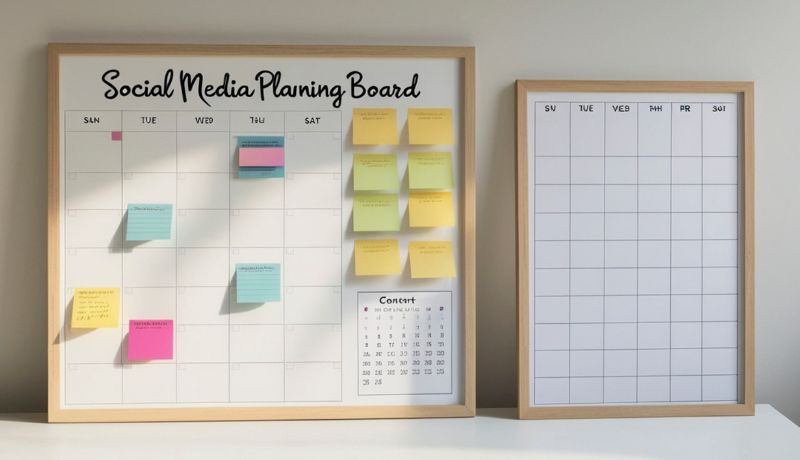
Build a content calendar around restaurant rhythms
A restaurant content calendar should reflect how the business actually runs.
Plan around:
- Weekly specials
- Happy hour
- Brunch
- Live events
- Local events
- Holidays
- Seasonal menus
- Catering deadlines
- Private dining pushes
- Loyalty campaigns
- New location openings
- Review response windows
- Community partnerships
For multi-location brands, separate national or brand-level campaigns from location-specific content. This helps your team maintain brand consistency while still giving each location room to feel local.
A practical structure might include:
- Brand-wide monthly themes
- Weekly promotional priorities
- Location-specific updates
- Evergreen content slots
- Real-time content opportunities
- Approval deadlines
- Publishing dates
- Reporting checkpoints
The more restaurant clients you manage, the more important this becomes. Without a shared calendar, your agency ends up managing social through memory, messages, and emergencies.
Create an approval process that respects restaurant realities
Restaurant owners and managers are busy. They are not ignoring approvals because they do not care. They are often running payroll, handling vendors, covering shifts, and jumping into service.
Your approval workflow should make it easy for them to say yes, no, or “change this detail.”
Strong approval workflows include:
- Clear deadlines
- One place to review content
- Minimal back-and-forth
- Version control
- Assigned approvers
- Location-level permissions
- Notes for menu, pricing, and compliance details
- A backup approver for time-sensitive content
For agencies, approval management is also a protection mechanism. It helps prevent off-brand posts, outdated specials, incorrect pricing, and unapproved claims from going live.
If approvals are a recurring bottleneck, revisit your broader process. Cloud Campaign’s guide to effective agency social media management covers the importance of building workflows that support both client outcomes and agency efficiency.
Standardize asset collection
Restaurant content depends heavily on visuals, but asset collection can easily become chaotic.
Create a repeatable system for gathering:
- Menu photos
- Interior and exterior shots
- Staff photos
- Event photos
- Seasonal dishes
- Behind-the-scenes clips
- UGC permissions
- Brand assets
- Logos and templates
- Location-specific imagery
For busy restaurants, give clear capture prompts. Do not just ask, “Can you send us content?” Ask for exactly what you need.
For example:
- “Please send three vertical videos of the new pasta being plated.”
- “Please capture one 10-second clip of the bartender pouring the seasonal cocktail.”
- “Please send a patio photo before dinner service while tables are set.”
- “Please take one staff photo with the catering order before pickup.”
Specific prompts produce better assets and reduce the need for reshoots.
Report in restaurant language
Restaurant clients do not always care about social metrics in isolation. They care about whether marketing is helping the business.
Frame reporting around goals such as:
- More awareness for new menu items
- Increased interest in reservations
- Stronger event promotion
- Better engagement with local audiences
- Growth in online ordering clicks
- Improved visibility for specific locations
- More consistent posting across the brand
- Stronger community response
- Better-performing content categories
Include platform metrics, but translate what they mean.
Instead of only saying:
“Instagram reach increased 18%.”
Add context:
“Instagram reach increased 18%, with the strongest performance coming from short-form videos featuring the seasonal brunch menu. We recommend building next month’s weekend traffic campaign around similar video formats.”
This turns reporting into strategy, not just a recap.
Use CloudStudio as the operational layer
Once your agency has the restaurant playbook, the next challenge is keeping it consistent across clients, locations, campaigns, and approvers.
CloudStudio helps agencies manage the operational side of social media fulfillment with content calendars, approval workflows, publishing, and reporting in one place. For restaurant clients, that means your team can plan campaigns around specials and seasonal moments, keep stakeholders aligned during approvals, schedule content across relevant channels, and report on performance without rebuilding the process from scratch every month.
That operational consistency matters when you are managing:
- Multiple restaurant clients
- Multi-location brands
- Location-specific promotions
- Different approval contacts
- Recurring campaigns
- High-volume content calendars
- Monthly reporting cycles
The goal is not to replace the strategy. The goal is to make the strategy easier to execute, repeat, and improve.
If your agency is building a more repeatable restaurant social media workflow, you can see how CloudStudio helps centralize restaurant content calendars, approvals, publishing, and reporting so your team can spend less time chasing assets and more time improving client results.
Conclusion
Restaurant social media is fast, visual, local, and tied to real-world behavior. A good post can create cravings, remind someone to book a table, promote a special, support a slow shift, or keep a favorite neighborhood spot top of mind.
For agencies, success does not come from one-off creativity alone. It comes from building a system:
- Set goals around traffic, loyalty, and repeat visits
- Choose platforms based on customer intent
- Turn daily restaurant moments into reusable content
- Promote without relying too heavily on discounts
- Create workflows for calendars, approvals, publishing, and reporting
- Keep brand-level consistency while allowing local relevance
That is the agency playbook for restaurant social media marketing.
If your team is ready to turn that playbook into a more consistent workflow, CloudStudio can help you manage restaurant content calendars, client approvals, publishing, and reporting in one place. Start with the strategy, then build the operational system that helps your agency deliver it at scale.




Want 10 free social posts for your client or brand?
CloudStudio helps automate your social presence by turning your brand, website, and goals into ready-to-post content. Share your info and we’ll show you what it can create.



















.png)

.png)
.png)
.png)
.png)
.png)
.png)
.png)
.png)
.png)
.png)
.png)
.png)






.png)
.png)
























.png)